
#PauseforPurpose
Resources
Read Our Resources

Open letter to UN WOMEN on AUCEVAWG
On the final day of the 2026 Commission on the Status of Women (CSW), ISLA has issued an open letter to UN Women raising serious concerns about the African Union Convention on Ending Violence Against Women and Girls (AU CEVAWG).

CEVAWG: A Missed Opportunity for South Africa to Lead Meaningfully on Ending Gender-Based Violence
In February 2025, the African Union (AU) Assembly adopted the Convention on Ending Violence Against Women and Girls (CEVAWG or ‘the Convention’). The Initiative for Strategic Litigation in Africa (ISLA), in partnership with Fòs Feminista and Akina Mama wa Afrika, undertook a comprehensive legal analysis of the Convention due to concerns about its alignment with international human rights law standards and treaty-making practice.

Legal Analysis of the African Union Convention on Ending Violence Against Women and Girls
In February 2025, the African Union (AU) Assembly adopted the Convention on Ending Violence Against Women and Girls (CEVAWG or ‘the Convention’). The Initiative for Strategic Litigation in Africa (ISLA), in partnership with Fòs Feminista and Akina Mama wa Afrika, undertook a comprehensive legal analysis of the Convention due to concerns about its alignment with international human rights law standards and treaty-making practice.
CEVAWG Love Letter
As the year draws to a close, we come together to support the #PauseforPurpose campaign. December 10th is International Human Rights Day, which also marks the end of the 16 Days of Activism to End Violence Against Women. We, however, understand that this violence does not take a break. The reality is that it often intensifies during this period.

Briefing Paper – Form Over Substance
The paper analyzes the potential of the recently adopted African Union Convention on Ending Violence Against Women and Girls in addressing technology-facilitated gender-based violence (TFGBV). Our conclusion is that the Convention falls short in crucial areas.

Unpacking AUCEVAWG Toolit
Adopted in February 2025 at the 38th Ordinary Session of the Assembly of Heads of
State and Government, the African Union Convention on Ending Violence Against
Women and Girls (AU CEVAWG) is the first continental treaty dedicated to addressing
all forms of violence against women and girls.

Objection! The AU Convention on Ending Violence Against Women and Girls, and the Question of Participatory Legitimacy
In February 2025, the African Union (AU) adopted the African Union Convention on Ending Violence Against Women and Girls (AUCEVAWG), hailed in some corners as a historic legal instrument addressing gender-based violence across the continent. And yet, for many African feminists, the moment was shocking and bittersweet. The adoption marked the culmination of a drafting process that, by most accounts, was characterised by exclusion and opacity, particularly of the very feminist movements whose decades of advocacy laid the groundwork for such a treaty. This article proffers that the lack of meaningful participation by a cross-section of civil society actors undermines the convention’s political and normative legitimacy, even if its legal validity remains intact.
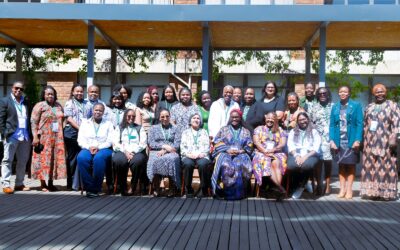
Communiqué Public Reading and Strategy Consultation on the AU Convention on Ending Violence Against Women and Girls (CEVAWG)
From 15 to 17 September 2025, lawyers, scholars, civil society organisations, human rights defenders and feminist activists convened for a Public Reading and Strategy Consultation on the African Union Convention on Ending Violence Against Women and Girls (CEVAWG). The meeting was co-convened by the Initiative for Strategic Litigation in Africa (ISLA), Akina Mama wa Afrika (AMwA), and Fòs Feminista, who brought together diverse voices from across the continent to interrogate the Convention, assess its progress/advancements, gaps or challenges and strategise on the way forward.

Before Ratification: Rethinking CEVAWG’s Implementation Gaps
On 31 July 2025, ISLA hosted an online conversation examining one of the most contentious aspects of the newly adopted African Union’s Convention on Ending Violence Against Women and Girls (CEVAWG): Article 14. This provision sets out the implementation and oversight framework for the Convention, placing primary responsibility in the hands of the African Commission on Human and Peoples’ Rights (ACHPR).

AUCEVAWG- A missed opportunity in the fight against violence towards women and girls in Africa
In February 2025, the African Union (AU) Assembly adopted the Convention on Ending Violence Against Women and Girls (CEVAWG), a landmark instrument that seeks to strengthen the continent’s response to one of its most pervasive human rights challenges. The Convention affirms the right of women and girls to live free from violence (Article 2) and extends protection across both public and private spheres, including cyberspace and conflict settings (Article 3). It prescribes comprehensive state obligations from enacting laws to combat violence, ensuring gender-responsive budgeting, and establishing coordinated support services for survivors (Articles 4–5), to protecting particularly vulnerable groups such as displaced women, women with disabilities, and older women (Article 7). The text also contains progressive provisions on the world of work (Article 8), safeguards for girls against harmful labour (Article 9), preventive measures that outlaw customs or traditions invoked to justify violence (Article 10) and guarantees of access to justice and protection for human rights defenders (Articles 11–12).
Podcasts
A Step Forward – But Not Far Enough: AU’s Convention on Ending Violence Under Scrutiny
19 September, 12 pm SAST
Point of View with Phemelo Motene delves into the day’s current affairs, touches on real issues that affect people’s daily lives and shares expert advice on questions posed by the audience. During this segment, Phemelo is joined by ISLA Panel of Expert member – Dr Ruth Nekura – where they discuss the scrutiny surrounding the AUCEVAWG.
Videos
Understanding the AU Convention on Violence Against Women and Girls
ISLA Conversations -The AU CEVAWG has an Implementation Gap (Article 14)
In February 2024, the African Union adopted a Convention on Ending Violence Against Women and Girls (CEVAWG). This should be a moment of celebration and an opportunity to amplify campaigns for ratification. However, we have identified an implementation gap in the Convention. It would be irresponsible to celebrate new human rights standards without clarity on how rights-holders can hold states accountable for failing to prevent and protect women and girls from violence. During this conversation, we explain why Article 14 undermines the struggle to end violence against women and girls.
Briefing Session on AU CEVAWG
The Public Reading of the African Union Convention on Ending Violence against Women and Girls
The adoption of a human rights treaty is often a historic moment and an important step in advancing the rights the treaty aims to address. It serves primarily as a legal instrument that establishes standards and creates obligations for states. While the CEVAWG has been celebrated as a progressive step in advancing the rights of women and girls, we have also noted significant gaps in its substance that may impede its ability to achieve its objectives.
The Initiative for Strategic Litigation in Africa, Fòs Feminista, and Akina Mama wa Afrika jointly organised a strategy consultation designed for a comprehensive analysis of the Convention. Over the course of three days, feminist legal scholars, practitioners, and activists examined the Convention in detail, reviewing it line by line and article by article to evaluate its progress and identify any gaps. The intended outcomes of this consultation were to generate recommendations and strategise ways to engage with the CEVAWG.