
#PauseforPurpose
Resources
Read Our Resources
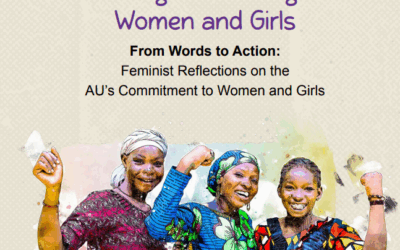
Feminist Reflections on the AU’s Commitment to Women and Girls
Thirty years after the adoption of the Beijing Declaration and Platform for Action, women’s rights, feminist, and civil society organizations (CSOs), funding partners, member states, UN Women, the African Union, and various bilateral and multilateral entities convened at the 69th Commission on the Status of Women (CSW) to reflect on progress made across different areas of action. Together, they strategized on how to build on these achievements, safeguard existing gains, and work toward achieving Sustainable Development Goal 5—gender equality—by 2030.
Briefing Paper – The Implementation Gap: Unpacking Article 14 of the CEVAWG and Civil Society Engagement
This briefing paper explores how African women’s rights organisations and feminist legal actors should engage with the African Union Convention on Ending Violence Against Women and Girls (CEVAWG). It calls for a deliberate, informed, and movement-led approach to the Convention—one that prioritises justice, institutional accountability, and the lived realities of African women and girls, rather than pursuing symbolic ratification for its own sake.

AU Convention Ending Violence Against Women and Girls CEVAWG
WE, THE HEADS OF STATE AND GOVERNMENT OF THE MEMBER STATES OF THE AFRICAN UNION:
RECALLING the Constitutive Act of the African Union, the African Charter on Human and Peoples’ Rights, and its Protocols, including the Protocol to the African Charter on Human and Peoples’ Rights on the Rights of Women in Africa, the African Charter on the Rights and Welfare of the Child, the African Union Convention for the Protection and Assistance of Internally Displaced Persons in Africa, and the OAU Convention Governing the Specific Aspects of Refugee Problems in Africa;
Podcasts
A Step Forward – But Not Far Enough: AU’s Convention on Ending Violence Under Scrutiny
19 September, 12 pm SAST
Point of View with Phemelo Motene delves into the day’s current affairs, touches on real issues that affect people’s daily lives and shares expert advice on questions posed by the audience. During this segment, Phemelo is joined by ISLA Panel of Expert member – Dr Ruth Nekura – where they discuss the scrutiny surrounding the AUCEVAWG.
Videos
Understanding the AU Convention on Violence Against Women and Girls
ISLA Conversations -The AU CEVAWG has an Implementation Gap (Article 14)
In February 2024, the African Union adopted a Convention on Ending Violence Against Women and Girls (CEVAWG). This should be a moment of celebration and an opportunity to amplify campaigns for ratification. However, we have identified an implementation gap in the Convention. It would be irresponsible to celebrate new human rights standards without clarity on how rights-holders can hold states accountable for failing to prevent and protect women and girls from violence. During this conversation, we explain why Article 14 undermines the struggle to end violence against women and girls.
Briefing Session on AU CEVAWG
The Public Reading of the African Union Convention on Ending Violence against Women and Girls
The adoption of a human rights treaty is often a historic moment and an important step in advancing the rights the treaty aims to address. It serves primarily as a legal instrument that establishes standards and creates obligations for states. While the CEVAWG has been celebrated as a progressive step in advancing the rights of women and girls, we have also noted significant gaps in its substance that may impede its ability to achieve its objectives.
The Initiative for Strategic Litigation in Africa, Fòs Feminista, and Akina Mama wa Afrika jointly organised a strategy consultation designed for a comprehensive analysis of the Convention. Over the course of three days, feminist legal scholars, practitioners, and activists examined the Convention in detail, reviewing it line by line and article by article to evaluate its progress and identify any gaps. The intended outcomes of this consultation were to generate recommendations and strategise ways to engage with the CEVAWG.